
Deciding whether to add on to your current Pittsburgh home or move can feel like juggling two big puzzles at once. Both choices come with their own costs, benefits, and hassles, and figuring out which fits your life best isn’t always straightforward. Maybe you want more space but love your neighborhood, or perhaps a fresh start sounds tempting but comes with sticker shock. This guide breaks down what matters most: money, lifestyle, neighborhood vibes, and timing, so you can make a clear choice.
Choosing between a home addition and moving in Pittsburgh depends on your priorities, budget, and long-term plans. If you love your neighborhood and want to customize your space without the hassle of relocating, a professionally designed home addition from M&M Builders PGH can enhance your home’s value and functionality. However, if your current home no longer meets your lifestyle or location needs, moving might be the better option.
Home Addition vs Moving: A Pittsburgh Perspective
Pittsburgh’s diverse neighborhoods, from the historic charm of Shadyside to the family-friendly streets of North Hills, each bring unique opportunities when deciding whether to add on or relocate. With property values climbing steadily, many homeowners ask: is expanding my current home a smarter investment than moving?
Building a home addition lets you retain ties to your community while gaining much-needed space. However, navigating local zoning laws and architectural restrictions calls for a contractor who knows the city. At M&M Builders PGH, we guide clients through these details so projects comply with local codes while enhancing home value.
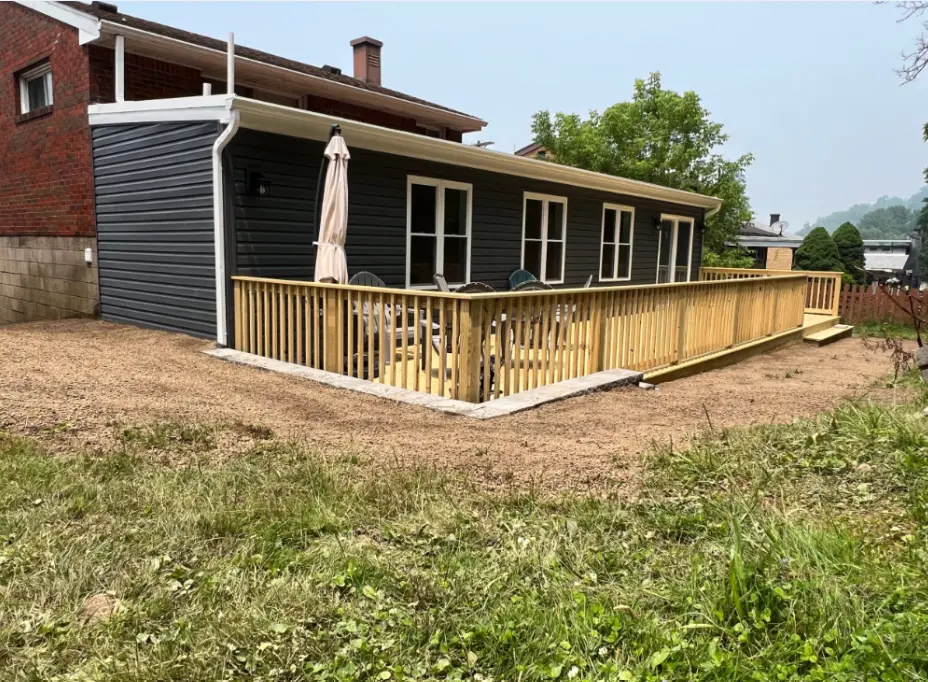
Moving into sought-after areas can mean paying top dollar amid limited availability, plus hidden costs like inspection repairs and adjusting to unfamiliar surroundings. Home additions offer flexibility instead. Adding a bathroom, extra bedroom, or deck can transform your lifestyle at comparatively lower cost.
- Local Market Stability: Investing in your current home builds equity.
- Customization: Tailor spaces to your family’s needs and tastes.
- Avoiding Moving Costs: No realtor fees, moving charges, or settling-in delays.
- Continuity: Preserve your social network and your kids’ school routines.
Still, additions come with challenges. Construction can disrupt daily life for weeks, Pittsburgh winters can delay exterior work, and some homes lack lot space for major expansions. At M&M Builders PGH, we balance these considerations with transparent estimates and schedules. If an addition isn’t feasible, we’ll help you explore alternatives tailored to Pittsburgh’s real estate landscape.
Benefits of Home Additions
Expanding your home does more than add square footage. It transforms how your household functions daily, whether you’re adding a bedroom, expanding a kitchen, or building a dedicated office. A well-designed addition meets your family’s evolving needs without forcing tight schedules around limited spaces.
The biggest advantage is customization. Instead of fitting your lifestyle into an existing layout, you design a space matching how you live, from open-concept gathering rooms to quiet retreats. Every choice, from lighting to flooring, reflects your personality.
Beyond comfort, additions carry real financial weight. Increasing square footage generally raises market value, especially with kitchen expansions and master suites that address features today’s buyers prioritize. Quality matters here. Durable materials and seasoned contractors ensure your addition stands the test of time.
Additions are also less disruptive than moving. You avoid the stress of selling, buying, and uprooting your family, while preserving community ties in Pittsburgh neighborhoods like Shadyside or Hampton.
At M&M Builders PGH, we guide homeowners through expansions with transparency and careful craftsmanship, blending your addition seamlessly with the original structure while elevating functionality. Thoughtful additions accommodate changing family dynamics for years to come, giving you room to grow while protecting your financial interest.
Downsides of Home Renovations
One immediate downside of a home addition is its impact on your daily routine. Construction is a constant presence that can disrupt everything from sleep to cooking. Noise, dust, and workers coming and going may make simple tasks feel exhausting.
Months-long renovations take a toll on households in neighborhoods like North Hills and Shadyside. You may eat out more, juggle kids without your usual environment, or need temporary accommodations if areas become uninhabitable.
Potential for Budget Overruns
A meaningful share of remodeling projects run over their initial estimates. Surprises hidden behind walls, like rotten framing, outdated wiring, or plumbing issues, can demand immediate fixes that weren’t accounted for.
To avoid financial surprises, work with a contractor who provides clear communication and detailed estimates upfront. At M&M Builders PGH, Mike and Mike emphasize transparency, helping homeowners understand potential hidden costs before they arise. Building in a contingency budget, often around 10 to 20 percent of total project cost, is another smart move.
Renovations sometimes reveal unforeseen design compromises or delays from material availability or permit approvals. That’s why having a seasoned local team like ours at M&M Builders PGH managing projects directly makes a real difference. Knowing the challenges ahead helps you prepare emotionally, logistically, and financially.
Advantages of Relocating
Moving offers immediate access to amenities tailored to your current lifestyle, whether that’s a shorter commute, higher-rated schools, or vibrant community spaces. Families choosing neighborhoods like Fox Chapel often cite strong school districts as a pivotal reason for moving, a factor remodeling can’t address.
Beyond schools and commutes, relocating provides access to newer homes with modern features like energy-efficient appliances, open floor plans, and smart home technology that would be costly to add through renovation.
When evaluating relocation, consider proximity to grocery stores, healthcare providers, parks, and entertainment venues. These factors improve quality of life in ways renovation may not without significant infrastructure investment.
Another advantage is the chance to downsize or upsize precisely without dealing with construction uncertainties. A move lets you tailor space for empty-nest living or growing family demands, with clearer budgeting than many renovation endeavors.
Drawbacks of Moving
Moving involves more than transporting belongings. It carries substantial emotional and financial weight. Packing years of items, coordinating logistics, and adjusting to a new environment can leave families exhausted.
The emotional toll is real. When you move, you leave behind a community, friends, neighbors, schools, and routines that shape daily life. Children especially can struggle adapting to new schools. Parents in close-knit Pittsburgh neighborhoods often share that their kids miss old friendships even after upgrades or shorter commutes.
Financially, relocating isn’t just the cost of the new home. Expenses pile up: movers, utility setup fees, deposits, and sometimes temporary storage or double rent. Pittsburgh’s fluctuating real estate market also adds resale uncertainty and potentially higher property taxes.
Moving also disrupts daily routines. Navigating unfamiliar roads, finding new service providers, and learning a new neighborhood’s quirks takes patience. Add the risk of damaged belongings or closing delays, and the appeal of improving the home you already love becomes clearer.
If moving still seems best, plan early, budget for extra expenses, and allow time to acclimate emotionally before settling in.
Financial Considerations
A home addition typically falls in the $50,000 to $200,000 range, depending on whether you’re building a simple extra room or a full-scale expansion with plumbing and electrical upgrades.
Moving costs often surprise homeowners. Combined fees for real estate agents, inspections, appraisals, and physical relocation can add up to a sizable percentage of your home’s selling price. On a $300,000 home, those costs can run into the tens of thousands.
- Home Addition: Investment focused on improving your existing property.
- Moving Costs: Fees from selling, buying, and relocating combined.
Neither path is necessarily cheaper at first glance, but each has distinct financial dynamics over time.
Long-term Financial Impact
Adding space tailored to your family’s needs can significantly increase your home’s value because you’re customizing a property already in a preferred location. Renovations insulate you from market fluctuations by enhancing livability rather than betting on resale timing.
Moving trades renovation for immediate change but exposes you to greater market risks. Frequent moves can erode equity through repeated transaction costs. Tax implications also shift: mortgage interest and property tax deductions vary, and improvements like kitchen or bathroom expansions can bring tax benefits through increased home basis at sale.
Working with a team that knows Pittsburgh’s market, like ours at M&M Builders PGH, helps tailor your renovation scope for maximum impact without overspending.
Visualizing Costs Over Time
| Aspect | Home Addition | Moving |
| Initial Cost | $50K to $200K | A meaningful percentage of home’s sale price |
| Market Risk | Lower, benefits from personalized upgrades | Higher, depends on market timing |
| Transaction Fees | Minimal beyond construction | Agent fees, closing costs, inspections |
| Potential Tax Benefits | Increased basis for capital gains relief | Fresh deductions, depends on purchase price |
| Equity Impact | Improves equity through upgrades | Equity reset with each property sale |
Impact on Lifestyle and Family
Adding onto your current home can transform how you live without uprooting your routine. Imagine turning an unused attic or basement into a bright space where kids do homework while you relax nearby. Each family member gains personalized areas while you maintain established networks: schools, neighbors, and community services your family relies on.
Additions tailor flexibility to your family’s lifestyle. Expanding the kitchen or creating an open-plan living area improves flow during gatherings and meals. With thoughtful remodeling from M&M Builders PGH, these upgrades become functional extensions of your life.
Moving offers a chance to reset routines and embrace fresh environments, sometimes essential for personal growth or evolving family dynamics. It might mean shorter commutes, different schools, or amenities better suited to new hobbies. The trade-off is adaptation: new routes, new neighbors, and patience as children settle into new schools.
Balancing Emotional and Practical Considerations
When debating between adding onto your current home or moving elsewhere in Pittsburgh, weigh both emotional attachment and practical lifestyle needs. In our conversations with homeowners, many emphasize how staying offered continuity when raising children, while others share how relocating helped them find communities aligned with future goals.
Create a pros-and-cons list that includes not just costs but daily rhythms, from morning routines to weekend leisure. Be honest about whether stability or change will bring greater happiness.
Ready to Transform Your Pittsburgh Home?
If you’re still deciding between a home addition and moving, the right guidance can make the choice much clearer. At M&M Builders PGH, we help homeowners across Pittsburgh design smart, functional home addition services that fit their lifestyle, budget, and long-term goals.
Whether you want more space for a growing family, a modern kitchen upgrade, or a full home expansion, our team will evaluate your property and help you understand what is truly possible before you commit to moving or renovating.
Give us a call today at 724-480-5916 or schedule your online consulation.
FAQs on Home Addition vs Moving in Pittsburgh
How does the timeline compare between home additions and relocation in Pittsburgh?
Home additions typically take 3 to 6 months from planning to completion. Moving can be quicker, often just a few weeks, but adds the hassle of house hunting and selling. If you want extra space without uprooting your life, an addition’s timeline is worth the wait.
How do property values impact the decision to add on versus move in Pittsburgh neighborhoods?
If your neighborhood’s value is climbing, adding on can boost your home’s worth further, making renovations a savvy investment. If values plateau or dip, moving might be smarter than investing in an addition that won’t pay off.
What are the zoning and permit challenges for home additions in Pittsburgh?
Pittsburgh’s residential zones have rules on lot coverage and setbacks, often requiring approvals from the city’s Bureau of Building Inspection. Permits for structural changes can add weeks and meaningful cost. Historic districts impose tighter restrictions, so check local guidelines early.
What are the cost differences between building a home addition and moving in Pittsburgh?
Home additions generally cost $80 to $200 per square foot, depending on materials and complexity. Moving expenses, including realtor fees, closing costs, and moving services, can add up to a significant share of the home’s value. Adding 500 square feet for around $100K is often cheaper than relocating to a similarly priced house.
What lifestyle factors should I consider when choosing between adding on or moving within Pittsburgh?
Weigh job location, commute, school districts, neighborhood vibe, and long-term plans. If you love your community and want to avoid the chaos of packing up, an addition keeps you rooted without sacrificing space. Moving may be better if your needs have changed or you’re craving a fresh start.